RRT Provides Support to First Responders at Francis Scott Key Bridge Collapse
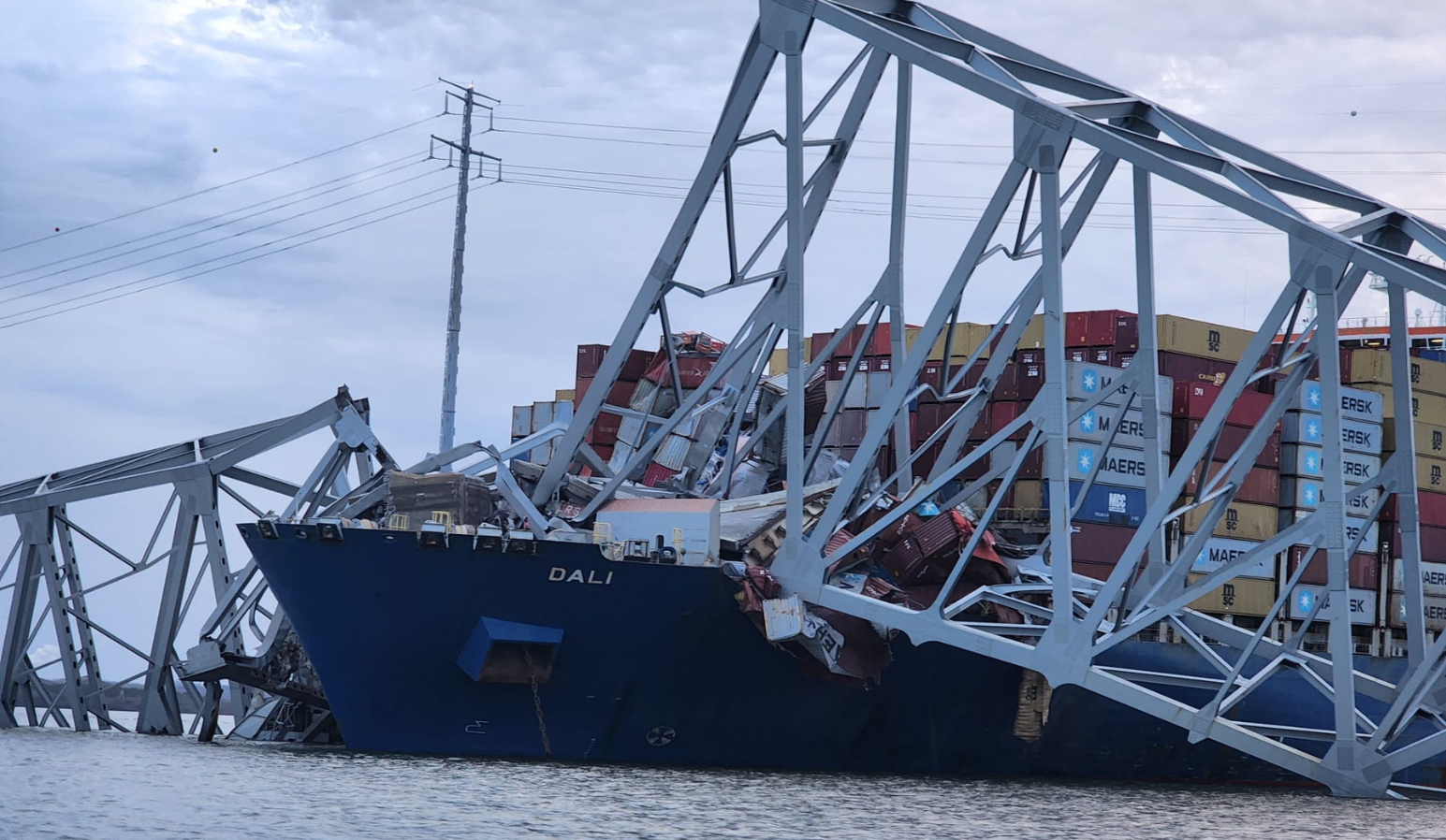
After the tragic collapse of the Francis Scott Key Bridge, the Rapid Relief Team (RRT) rapidly mobilized to provide support to first responders at the scene.
Within two hours of the incident, RRT volunteers from Baltimore and Washington arrived. Volunteers delivered over 1,400 meals and refreshments to emergency services personnel across 16 agencies engaged in the rescue operation. They served breakfast sandwiches and coffee in the morning, then fresh pizza for lunch, and signature burgers for dinner. For responders who could not take a break, RRT provided 120 nutritious Frontline Snack Packs.
“Our heartfelt thoughts and prayers extend to those impacted by this incident”, said Randall Thomas, RRT’s North American Director. “This is an unspeakable tragedy, with many first responders working tirelessly.”
He continued: “Core to RRT’s mission is to ensure those involved in the rescue operations have hearty food to keep their energy up. Our volunteers are always on standby, ready and willing to help.”
About the Francis Scott Key Bridge Collapse
The Francis Scott Key Bridge is a partially collapsed bridge in greater Baltimore. It opened in 1977 and collapsed in March 2024 after a container ship struck one of its piers.
Members of a maintenance crew working on the bridge are believed to be the only people injured or killed in the disaster. Six bodies were recovered, and two people were rescued from the river. Just before the collision, the ship’s crew sent a mayday call, which led police and bridge workers to halt traffic onto the bridge.
The collapse, which blocked the Patapsco shipping channel, immediately halted almost all passenger and cargo shipping to the Port. Maryland Governor Wes Moore declared a state of emergency. By April. three temporary channels were opened, allowing about 15% of pre-collapse shipping to pass. Then, a temporary deep-draft channel was opened, allowing some larger ships to enter and leave.
President Joe Biden said that the federal government would pay for the entire cost of reconstructing the bridge. Maryland Department of Transportation said they plan to replace the bridge by autumn 2028. An estimated cost of $1.7 billion to $1.9 billion has been given.